
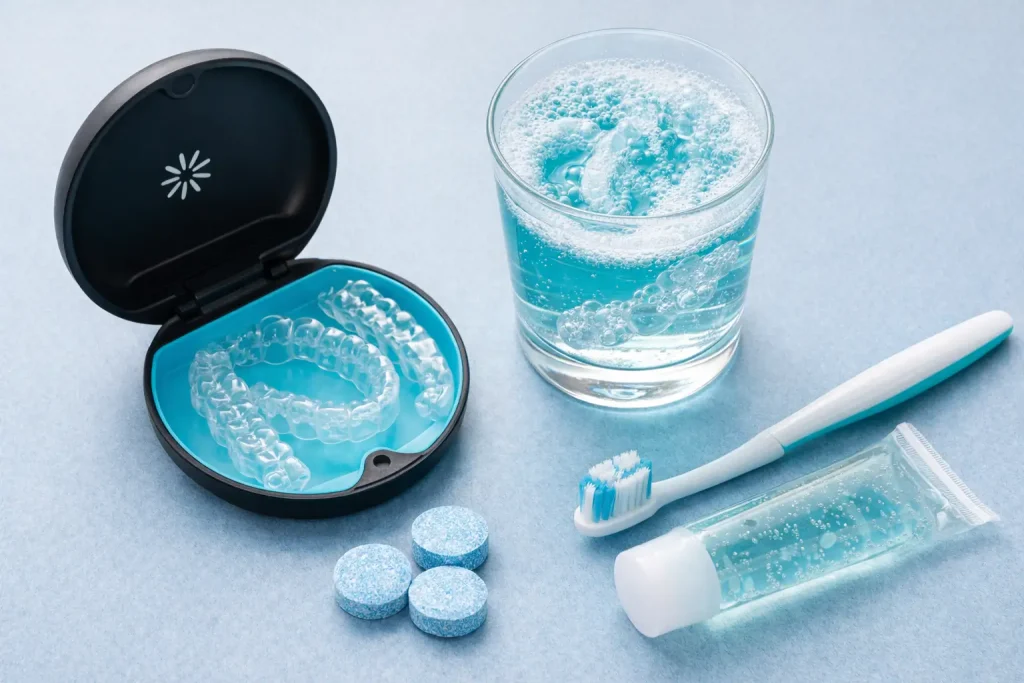
Keeping Invisalign aligners clean is one of the most important responsibilities patients have during orthodontic treatment, yet it is also one of the areas that causes the most uncertainty. Many patients worry about whether they are cleaning their aligners correctly, whether certain products might damage the trays, or whether discoloration and odor are normal. These concerns are completely understandable. Invisalign aligners are worn for most of the day and sit directly against the teeth, so proper cleaning plays a vital role not only in keeping the trays clear and fresh but also in protecting overall oral health.
Invisalign aligners can easily collect bacteria, plaque, and residue from saliva, food, and beverages. When trays are not cleaned properly, this buildup can lead to unpleasant odors, cloudiness, and an increased risk of cavities or gum irritation. Because aligners create a sealed environment around the teeth, anything trapped underneath them can remain in contact with enamel for long periods of time. This makes consistent and effective cleaning essential for maintaining a healthy mouth throughout treatment.
Many patients also worry about damaging their aligners during cleaning. Invisalign trays are durable but not indestructible, and certain habits such as using hot water or abrasive products can warp or scratch the plastic. Understanding which cleaning methods are safe and which should be avoided helps patients feel confident that they are caring for their aligners properly without shortening their lifespan or affecting treatment accuracy.
At Freedman & Haas Orthodontics, we place a strong emphasis on patient education and personalized guidance. We understand that every patient’s routine, lifestyle, and comfort level are different, which is why we take the time to explain Invisalign cleaning in a clear and practical way. Our goal is to help patients keep their aligners clean, comfortable, and effective so they can focus on the excitement of their smile transformation rather than worrying about maintenance.
Ways To Clean Invisalign Aligners
There are several ways patients commonly clean their Invisalign aligners, and understanding why cleaning matters is just as important as knowing how to do it. Invisalign trays are exposed to bacteria from the mouth every time they are worn. Even when patients brush and floss diligently, saliva naturally contains microorganisms that can adhere to the aligner surface. Over time, this buildup can create a film that affects both hygiene and appearance.
Daily cleaning helps prevent plaque and bacteria from accumulating on the trays. Without regular cleaning, aligners can develop a cloudy appearance or an unpleasant smell. More importantly, bacteria trapped between the aligners and teeth can increase the risk of tooth decay and gum inflammation. Because aligners are worn for twenty to twenty-two hours per day, cleanliness is essential for maintaining oral health.
Many patients use a combination of methods to keep their aligners clean, such as gentle brushing, soaking, and rinsing. The key is consistency and choosing methods that are effective without being harsh. Invisalign trays should be treated as medical devices rather than casual accessories. Gentle, orthodontist-approved care supports aligner longevity and ensures they continue to fit precisely as intended.
We help patients understand that cleaning aligners does not need to be complicated or time-consuming. When patients develop a simple, consistent routine that fits into their daily life, aligner care becomes second nature. The most important factor is not the specific product used but the commitment to regular, thoughtful cleaning.
Polident To Clean Invisalign
Polident and similar denture-cleaning tablets are commonly discussed as a cleaning option for Invisalign aligners. These products are designed to dissolve in water and create a fizzing action that helps loosen debris and reduce bacteria. Some Invisalign patients choose Polident because it is widely available, easy to use, and familiar to those who have cared for dental appliances in the past.
When used properly, Polident can help remove surface buildup and freshen aligners. The effervescent action allows the solution to reach small crevices on the aligner surface that may be difficult to clean with brushing alone. Many patients notice that their aligners appear clearer and smell fresher after soaking. However, it is important to understand that these products are formulated for dentures, which are made from different materials than Invisalign trays.
Orthodontists often advise caution when using denture cleaners like Polident too frequently. Some formulations can be slightly abrasive or contain ingredients that may dull the surface of Invisalign trays over time. Excessive soaking or prolonged exposure may increase the risk of discoloration or surface wear, especially if the aligners are already prone to staining.
Efferdent To Clean Invisalign
Efferdent is another denture-cleaning product that some Invisalign patients consider for aligner care. Like Polident, Efferdent tablets dissolve in water and create a bubbling action that helps lift debris and reduce odors. Patients are often drawn to Efferdent because it is marketed as a powerful cleaner and is easy to incorporate into a daily routine.
When aligners are soaked in Efferdent, patients may notice visible bubbles forming on the surface of the trays. This reaction helps dislodge plaque and residue that can cling to the plastic. Many patients appreciate the fresh feeling aligners have after soaking, especially if they have been worn for long periods throughout the day.
However, Efferdent is generally considered a stronger cleaning agent, and this strength can be a drawback if not used carefully. Overuse or prolonged soaking may contribute to surface changes on Invisalign trays, potentially affecting their clarity. Because aligners rely on a smooth surface for comfort and proper fit, preserving the integrity of the plastic is essential.
At Freedman & Haas Orthodontics, we encourage patients to view Efferdent as an occasional cleaning option rather than a daily necessity. We discuss appropriate usage based on each patient’s aligner schedule and oral hygiene habits. With proper guidance, Efferdent can be used safely, but it should never replace gentle daily cleaning methods recommended by your orthodontist.
Efferdent Or Polident: Which Is Better For Cleaning Invisalign?
Patients often ask whether Efferdent or Polident is better for cleaning Invisalign aligners, and the answer is not as simple as choosing one over the other. As mentioned before, both products are designed to clean dental appliances through effervescent action, and both can be effective at reducing odor and surface buildup when used correctly. The key difference lies in their formulation strength and how frequently they are used.
From an orthodontic perspective, neither product is inherently superior for Invisalign cleaning when compared to consistent, gentle daily care. Polident is often perceived as slightly milder, while Efferdent may feel more aggressive in its cleaning action. This difference means that individual habits, aligner wear time, and sensitivity to staining all play a role in determining which option may be more suitable for a particular patient.
It is also important to remember that Invisalign aligners are replaced regularly throughout treatment. Because each set is worn for a limited time, the goal of cleaning is to maintain hygiene and clarity during that wear period rather than achieving long-term durability as with dentures. Over-cleaning or using harsh products too often can do more harm than good.
At Freedman & Haas Orthodontics, we help patients evaluate their individual needs and routines when choosing a cleaning method. We emphasize that no soaking product should be used excessively and that professional guidance is always more important than brand selection. When patients understand how and when to use these products, they can make informed choices that support both comfort and treatment success.
How Often Should I Clean My Invisalign Trays?
Invisalign trays should be cleaned every single day without exception, because they are worn for the majority of each twenty-four-hour period and remain in close contact with the teeth and gums. From the moment aligners are placed in the mouth, they are exposed to saliva, natural oral bacteria, and microscopic debris. Even when teeth appear clean, the mouth is a living environment where bacteria constantly form biofilm. Daily cleaning prevents this biofilm from accumulating on the aligners and being sealed against the enamel for hours at a time.
Most patients benefit from cleaning their Invisalign trays at least twice a day, typically in the morning and evening, as part of their normal oral hygiene routine. Morning cleaning is especially important because aligners are worn overnight, a time when saliva flow is reduced and bacteria can multiply more easily. Evening cleaning helps remove residue that builds up throughout the day from speaking, swallowing, and normal oral activity. When aligners are cleaned consistently at these times, they remain clearer, fresher, and far more comfortable to wear.
Cleaning after meals is another important consideration. Invisalign aligners should always be reinserted onto clean teeth, which means brushing and flossing after eating whenever possible. While aligners themselves may not require a full cleaning after every meal, they should at least be rinsed thoroughly before being placed back in the mouth. Reinserting aligners without addressing food residue increases the risk of trapping sugars and acids against the teeth, which can contribute to cavities, enamel weakening, and gum irritation over time.
Patients who clean their aligners inconsistently often notice changes quickly. Trays may develop a cloudy appearance, retain odors, or feel coated when worn. These signs indicate bacterial buildup rather than normal wear. Beyond cosmetic concerns, poor aligner hygiene can directly affect oral health by increasing plaque accumulation around the teeth. We emphasize that aligner cleaning is not simply about appearance but about protecting the teeth during orthodontic movement.
It is also important to understand that Invisalign trays are replaced on a regular schedule, but this does not eliminate the need for daily cleaning. Even though each set is worn for a limited time, bacteria can build up rapidly in just a few days. Treating aligners as disposable does not protect the teeth underneath them. Consistent care ensures that every set of trays supports a healthy oral environment throughout treatment.
At Freedman & Haas Orthodontics, we encourage patients to view aligner cleaning as a non-negotiable part of Invisalign success, much like wearing the aligners for the recommended number of hours. Establishing a predictable routine early makes the process feel effortless rather than burdensome. With daily attention and simple habits, patients can maintain clean, clear aligners and support excellent treatment outcomes from start to finish.
Dos And Don’ts For Cleaning Invisalign Aligners
Proper Invisalign cleaning involves understanding both helpful practices and habits that should be avoided. One of the most important principles is to treat aligners gently. Using harsh chemicals, abrasive toothpaste, or rough brushes can scratch the plastic surface. These scratches can make aligners more noticeable and create tiny grooves where bacteria can accumulate.
Heat is another common mistake that patients need to avoid. Invisalign aligners should never be cleaned with hot or boiling water. High temperatures can warp the plastic, altering the fit and potentially affecting how teeth move. Even warm water that feels comfortable to the touch can be too hot for aligners, so cool or lukewarm water is always the safer choice.
Another habit to avoid is skipping cleaning altogether or relying solely on rinsing. While rinsing helps remove loose debris, it does not adequately address bacteria or plaque buildup. Aligners need more thorough cleaning to stay fresh and hygienic. Leaving aligners dry and uncleaned for long periods can also lead to odor and staining.
At Freedman & Haas Orthodontics, we emphasize gentle, effective care above all else. Simple habits, such as cleaning aligners consistently and handling them carefully, protect both the trays and the teeth underneath. By avoiding damaging practices and following orthodontist-recommended methods, patients can keep their aligners in excellent condition throughout treatment.
Conclusion
Proper Invisalign cleaning is a critical part of successful orthodontic treatment, supporting both oral health and aligner performance. Clean aligners help prevent bacteria buildup, reduce the risk of cavities, and keep trays clear and comfortable to wear. When patients understand why cleaning matters and how to do it safely, they feel more confident and in control of their treatment.
Daily, gentle cleaning habits are far more effective than aggressive or inconsistent approaches. Products such as Polident and Efferdent can be useful when used appropriately, but they should always be part of a broader routine guided by orthodontic advice. Protecting aligners from heat, harsh chemicals, and neglect helps ensure they continue to fit properly and perform as intended.
We are committed to helping patients feel informed and supported at every stage of their Invisalign journey. Our personalized guidance ensures that each patient knows how to care for their aligners in a way that fits their lifestyle and promotes long-term oral health. We believe that education is one of the most powerful tools for achieving excellent orthodontic outcomes.
If you have questions about cleaning your Invisalign aligners or want personalized recommendations based on your treatment plan, we encourage you to contact Freedman & Haas Orthodontics or schedule an appointment. Our team is always here to help you protect your smile and make the most of your Invisalign experience