
There is a particular kind of hesitation we see all the time. Someone has spent years, sometimes decades, quietly wishing their teeth were straighter, and they finally work up the nerve to ask the question that has been holding them back. Is it too late for me? They picture braces as something that belongs to middle school hallways, and they wonder whether that window closed long ago without them noticing.
If any of that sounds familiar, here is the short version before we go a word further. No, it is almost certainly not too late, and the reasons rest on biology rather than on wishful thinking. Teeth simply do not keep track of birthdays. In the sections ahead we will explain exactly why your teeth can still move at this stage of life, give you an honest answer on whether treatment takes longer for adults, and walk through the one thing that genuinely matters far more than the number of candles on your last cake.
The Short Answer, Plain and Simple
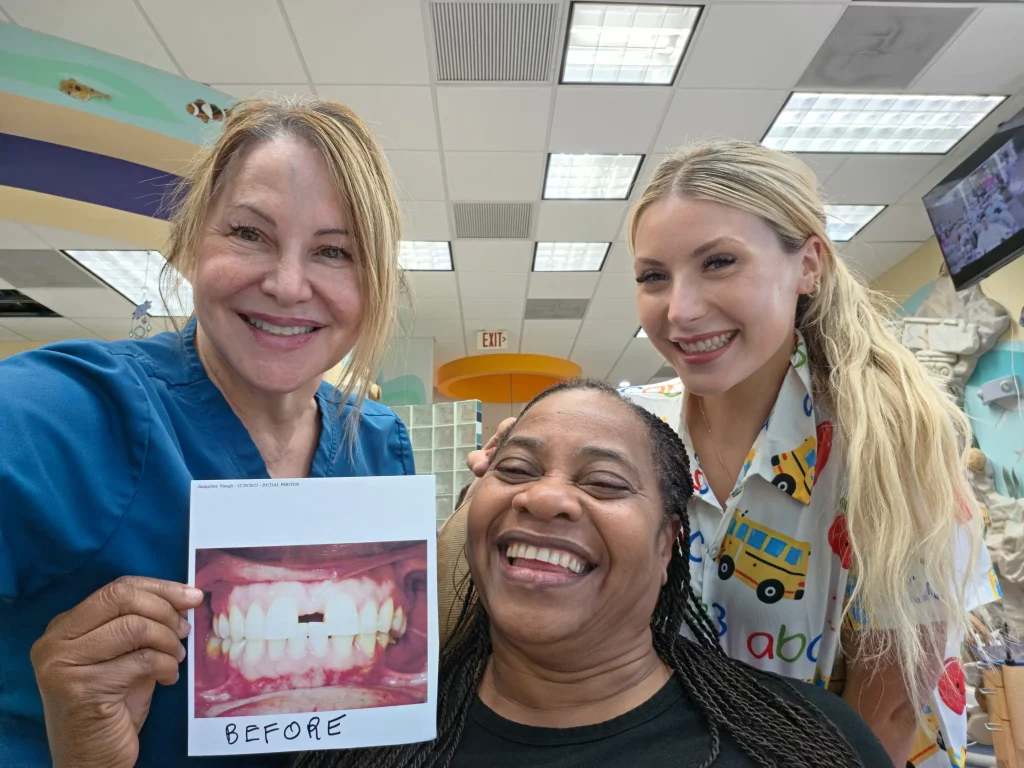
Let us be direct, because this is the reassurance most people are really after. There is no upper age limit for orthodontic treatment. We have straightened smiles for patients in their twenties, their forties, their sixties, and well beyond that. Adults now make up a sizable and steadily growing share of orthodontic patients, somewhere in the neighborhood of one in four across the country, and that number has been climbing for years as more people discover the door was never actually closed.
The notion that braces belong only to teenagers is a cultural leftover rather than a medical fact. It lingers because most people happen to get orthodontic treatment during adolescence, when it folds neatly into growing up, and not because adult teeth are somehow unable to respond. They respond perfectly well, and understanding why is the surest way to lay the worry to rest for good.
Why Teeth Can Move at Any Age
To see why age is not the barrier people assume it to be, it helps to understand how teeth move at all. Your teeth are not cemented rigidly into your jaw. Each one hangs suspended in its socket by a web of fibers called the periodontal ligament, cushioned by living bone that is forever being broken down and rebuilt. When an orthodontist applies gentle, sustained pressure, the bone on one side of a tooth dissolves to let it travel, while fresh bone fills in behind it. This is the very same remodeling that makes teeth feel loose and then firm up again during treatment, and it is remarkable precisely because it never switches off.
Two kinds of cells do the actual work, and they never retire. One type dissolves bone ahead of a moving tooth to clear its path, and the other lays down fresh bone behind it to lock the tooth into its new spot. This demolition and construction crew keeps working in tandem for your whole life, which is the single most important fact behind everything in this article.
Here is the part that matters most. That bone remodeling continues throughout your entire life. The cells responsible for dissolving old bone and laying down new bone remain on duty at eighty just as they were at fifteen. Your body is perpetually renewing its skeleton, teeth and jaw very much included, which means the fundamental machinery that makes orthodontics possible is available to you at any age you happen to be. The pressure of braces or aligners does nothing exotic. It simply harnesses a process your body is already running around the clock.
Does It Really Take Longer for Adults?
This is the fair follow-up, and it deserves an honest answer rather than a merely comforting one. The truth is genuinely nuanced. At the level of a single tooth, there is reasonable evidence that adult teeth move a little more slowly, especially during the first weeks of treatment. Adult bone is denser, and the initial cellular response takes a touch longer to rouse itself, so the earliest phase can lag behind what we tend to see in a teenager.
And yet, to the surprise of many people, that slower start does not reliably add up to a longer treatment overall. A meta-analysis that pooled seven studies and more than eleven hundred patients found no meaningful difference in total treatment time between adults and adolescents. The overall estimate actually landed a hair shorter for adults, though not by a significant margin. A good part of the reason is that adults tend to make far more cooperative patients. They wear their elastics, they keep their aligners in for the hours they should, they show up for their appointments, and that steady diligence quietly makes up for a slower biological head start. So while any given tooth may move a bit more deliberately, the finish line often arrives right about when expected.
What Actually Changes With Age
None of this is to pretend that treating an adult is identical to treating a thirteen-year-old. A handful of real differences do come with age, and a careful orthodontist plans around every one of them rather than ignoring them.
Adult bone remodels a little more slowly out of the gate, as we have said. Adults also tend to feel somewhat more discomfort early on, tied to a stronger inflammatory response in the tissues around the teeth, though for the large majority this stays mild and short-lived. Because adults are no longer growing, certain bite problems rooted in the jawbones themselves cannot be corrected by guiding growth the way they can in a child, which now and then shapes the approach. And the tissues surrounding adult teeth can be a touch less forgiving, so gentle, well-measured forces matter more than ever.
There is one more honest point worth making, and it argues for efficient, well-planned treatment rather than against treatment itself. Because an adult tooth can be a little slower to recover between the pressures of movement, very long or poorly managed treatment carries a somewhat higher chance of minor root shortening than it would in a teenager. In practice this is why a thoughtful orthodontist favors light, steady forces and a clear plan with a defined endpoint, keeping the whole process as brisk and controlled as the biology allows. Managed well, the risk stays small and the outcome stays excellent.
These are adjustments rather than obstacles. They influence how treatment is delivered, not whether it can happen in the first place. An experienced orthodontist accounts for the denser bone, the slightly slower response, and the particulars of the adult mouth as a matter of ordinary routine.
The Thing That Matters More Than Your Age
If age is not the real gatekeeper here, something else is, and this is the part worth your attention. What actually determines whether you can have braces is not how old you are but how healthy the foundation beneath your teeth happens to be. Orthodontics moves teeth through bone and gum, so that bone and gum need to be sound both before treatment begins and all the way through it.
This is where adults truly differ from teenagers, not in age itself but in what the passing years may have brought along with them. Gum disease, bone loss, untreated decay, and aging dental work all need to be handled first, because moving teeth through compromised tissue invites exactly the kind of trouble we work to avoid. Someone with healthy gums, or gum disease that has been properly brought under control, can almost always move forward, whereas active periodontal disease must be treated before a single tooth is moved. The encouraging news is that these are nearly all manageable problems. A thorough evaluation sorts out what, if anything, needs attention first, and for most healthy adults that answer turns out to be nothing at all.
So, Is It Ever Actually Too Late?
Honestly, it rarely is. The one real reason to turn down orthodontic treatment is a foundation too compromised to support tooth movement safely, and even in that situation the goal becomes repairing the foundation rather than declaring the case closed for good. Age all on its own is almost never the deciding factor.
Many of the adults we treat are not starting from scratch anyway. A large share had braces as teenagers and then watched their teeth gradually drift back out of line over the years that followed, usually because a retainer got set aside somewhere along the way. Correcting that is often quite straightforward, and the same tools available to any teenager, whether traditional braces or clear aligners, are available to you now, frequently in forms far more discreet than anything that existed back when you were in school.

Start the Conversation at Freedman & Haas
The only way to know what is truly possible for your smile is to have someone look at it properly, and that is a conversation we welcome every single day from adults of every age. At Freedman & Haas Orthodontics, our board-certified team has guided more than 30,000 patients across West Palm Beach and Wellington toward straighter, healthier smiles, and a great many of them first came to us long after their school years were behind them.
If you have been quietly wondering whether you missed your chance, let us put the question to rest. Schedule a consultation today, and we will tell you honestly and specifically what your options look like.
Frequently Asked Questions
Is there an age limit for getting braces?
No. There is no upper age limit for orthodontic treatment. Teeth move at any age because the bone around them is constantly remodeling throughout life. What matters is the health of your gums and the bone supporting your teeth, not the year you were born. Patients well into their sixties and beyond are treated successfully every day.
Do braces work more slowly for adults?
At the level of individual tooth movement, adult teeth often move a little more slowly at first, since adult bone is denser and the early cellular response is more gradual. Even so, research finds no meaningful difference in total treatment time between adults and adolescents overall, partly because adults tend to follow instructions more faithfully.
Does getting braces hurt more as an adult?
Adults sometimes report a bit more discomfort in the early days, linked to a stronger inflammatory response in the tissues around the teeth. For the vast majority it stays mild and temporary, much like the soreness any patient feels after an adjustment. It is rarely a reason to avoid treatment.
Can I get braces again if I had them as a teenager?
Yes, and it is very common. Many adults seek treatment precisely because their teeth drifted after an earlier round of braces, often once the retainer was abandoned. Re-treating shifted teeth is usually more straightforward than the original case, and today’s options include far more discreet appliances than most people had the first time.
What would actually stop me from getting braces as an adult?
The main reasons are untreated gum disease, significant bone loss, or active decay, since teeth cannot be moved safely through an unhealthy foundation. These are usually treatable, and once they are addressed, treatment can typically proceed. Age itself is almost never the barrier. A proper evaluation is the only way to know your specific situation.