
Your braces come off. You lift the mirror, ready for the straight smile you waited two years for. Then you see them: chalky white patches on your teeth, right where the brackets used to sit. It is one of the most deflating moments in orthodontics, and it is more common than most patients ever expect.
Here is the good news up front. White spots are largely preventable, and if they do appear, several treatments can improve or erase them. But prevention beats treatment by a wide margin, so the habits you build during treatment matter far more than anything done after. Let me walk you through what these spots actually are, why braces make them likely, exactly how to stop them, and what your options are if they show up anyway.
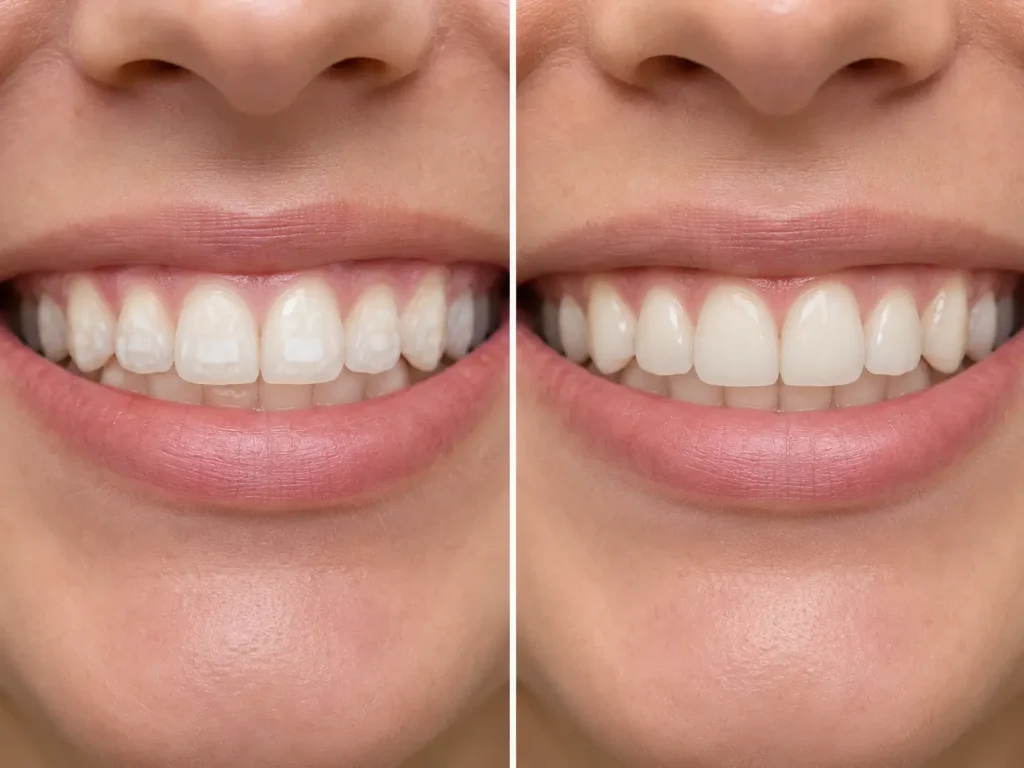
What Are Those White Spots, Exactly?
Those white spots are not stains, and they are not the glue left over from your brackets. They are the earliest visible stage of tooth decay, and the clinical name is a white spot lesion, or enamel demineralization.
Here is what is happening under the surface. Enamel is built mostly from calcium and phosphate. When plaque sits undisturbed on a tooth, the bacteria in it feed on sugar and produce acid. That acid pulls calcium and phosphate out of the enamel in a process called demineralization. The area loses minerals from just beneath its surface, becomes porous, and scatters light differently than healthy enamel. That is why it looks chalky and opaque instead of glossy.
Think of it as the warning shot before a cavity. The lesion has not yet collapsed into a hole, so it is still reversible in its early stage. Left to progress, though, it can turn into full decay. That window is exactly why catching it early matters so much.
Why Braces Make White Spots More Likely
Braces do not cause white spots. Plaque does. But braces create the perfect conditions for plaque to hide and thrive, and that is the real connection.
Every bracket and wire is a new obstacle for your toothbrush. Plaque collects around the edges of brackets and under wires, in spots a brush struggles to reach. Leave it there, and acid production concentrates in those exact areas. This is why the spots so often appear as little squares or halos framing where each bracket sat. It is also why keeping your teeth and gums clean during braces is not just advice, it is the single biggest factor in whether you finish treatment with pristine enamel.
The numbers make the risk clear. Estimates of white spot prevalence during fixed brace treatment vary widely, from as low as 2% to as high as 96% across studies, according to a review in the American Journal of Orthodontics and Dentofacial Orthopedics. A landmark 1982 study by Gorelick, published in the same journal, found that about half of orthodontic patients developed at least one white spot lesion. Half. That is not a fringe risk, it is a coin flip, and the deciding factor is largely oral hygiene.
Speed is the other thing to understand. These lesions can become visible in as little as four weeks. A month of slack brushing during a busy stretch is genuinely enough to start one. And certain teeth are more vulnerable than others, with the upper lateral incisors, right in your smile line, among the most commonly affected.
How to Prevent White Spots During Treatment
This is the part that actually protects your smile, so it deserves the most attention. Prevention is not complicated, but it does demand consistency. Every day, not most days.
Brushing and Flossing That Reach the Risk Zones
Generic brushing advice will not cut it with braces. You have to target the danger zones directly: the margin where each bracket meets the tooth, especially along the gumline side where the study data shows demineralization concentrates.
A few specifics that make a real difference:
• Brush after every meal, not just twice a day. Food trapped around brackets is fuel for acid, and the sooner it is gone, the less damage it does.
• Angle the brush at the bracket. Clean above and below each one deliberately, not just across the flat front of the tooth.
• Add tools built for braces. An interdental brush that fits under the wire and a water flosser reach what a regular brush and string floss miss.
• Do not skip flossing because it is annoying with braces. It is tedious, but a floss threader or water flosser makes it doable, and it is covered in detail in our guide to how to floss with braces.
Fluoride, Diet, and the Role of Saliva
Cleaning removes plaque. These three levers strengthen the enamel itself and starve the acid that attacks it.
Fluoride is your most powerful ally, and the evidence backs that up hard. In a systematic review and network meta-analysis of orthodontic patients, fluoride varnish showed the strongest, statistically significant reduction in white spot lesions, cutting the odds by roughly 75% compared to no intervention. The American Dental Association recommends brushing with a fluoride toothpaste twice daily using a soft-bristled brush. Your orthodontist may also apply an in-office fluoride varnish or prescribe a higher-strength fluoride toothpaste for home use.
Diet is the lever most people underestimate. Every time you eat or drink something sugary or acidic, you feed the acid cycle. Sodas, sports drinks, energy drinks, and constant snacking are the worst offenders because they bathe your teeth in sugar throughout the day. You do not have to give everything up. Just cluster sweets with meals rather than sipping and grazing for hours, which gives your mouth time to recover between hits.
Saliva is your body’s own defense, and it is worth helping along. It neutralizes acid and carries calcium and phosphate back to the enamel. Staying well hydrated keeps saliva flowing, and sugar-free gum with xylitol can boost that protective flow between brushings.
Can White Spots Be Treated or Removed After Braces?
Yes, often. But I want to be straight with you about expectations, because this is where honest information matters most. Some treatments genuinely reverse early lesions. Others improve appearance without fully erasing the mark. The right choice depends on how deep and how severe the spot is.
An important caveat first: even when enamel remineralizes and re-hardens, the opaque white color often remains. That is precisely why prevention outranks every treatment on this list. Still, real options exist, and they range from conservative to cosmetic.
| Option | How it works | Best for |
| Remineralization (fluoride, CPP-ACP) | Fluoride varnish and casein-based pastes like MI Paste push calcium and phosphate back into the enamel to re-harden it | Early, mild spots caught soon after debonding |
| Resin infiltration (Icon) | A thin resin seeps into the porous lesion and fills it, so the spot blends back into the surrounding tooth | Spots that stay visible after remineralization |
| Microabrasion | A fine abrasive gently removes a very thin outer layer of stained enamel | Shallow, surface-level white spots |
| Veneers or bonding | A cosmetic covering over the tooth face | Severe spots that do not respond to conservative care |
A word on resin infiltration, since it is the option patients ask about most. In a randomized controlled trial, the resin infiltration product Icon significantly improved the appearance of white spots and held that improvement at six months, outperforming fluoride varnish for masking the marks. It is minimally invasive, meaning it does not require drilling. For spots that survive remineralization, it is often the most effective next step before anything cosmetic is considered.
Our advice: start conservative. Give remineralization a genuine chance for the first several months after your braces come off, because early lesions can improve on their own with diligent fluoride and calcium support. If a spot stays put, then step up to resin infiltration or microabrasion. Save veneers for the rare severe case, since covering a tooth is a permanent commitment for what is often a cosmetic issue.
Who Is Most at Risk (and How to Know if That’s You)
White spots do not hit everyone equally. Some patients sail through two years of braces with flawless enamel, while others develop spots within months. Knowing where you fall helps you calibrate how aggressive your prevention needs to be.
You are at higher risk if any of these apply to you:
• Inconsistent brushing. This is the biggest factor by far. If you already skip brushings without braces, the risk climbs sharply once brackets are added.
• A sugary or acidic diet. Frequent sodas, sports drinks, energy drinks, and all-day snacking keep your enamel under constant acid attack.
• Longer treatment time. The more months your teeth spend in brackets, the more opportunity plaque has to do damage, so complex cases warrant extra vigilance.
• Naturally dry mouth. Less saliva means less natural acid-neutralizing and remineralizing power, whether from medication, mouth breathing, or dehydration.
• A history of frequent cavities. If you were cavity-prone before braces, that susceptibility does not disappear during treatment.
If two or more of these describe you, tell your orthodontist at the start. That is not an admission of failure, it is useful clinical information. It lets the team front-load protection with fluoride varnish, a prescription-strength toothpaste, and closer monitoring, rather than reacting after a spot has already formed. Prevention tailored to your actual risk always beats a one-size-fits-all routine.
Do Clear Aligners Have the Same Risk?
This is a fair question, and the answer is genuinely reassuring for aligner patients. Clear aligners like Invisalign carry a much lower white spot risk than fixed braces, for one simple reason: you take them out to eat and to clean your teeth.
With no brackets glued to your enamel, there are no permanent obstacles trapping plaque, and you brush and floss normally. That said, aligners are not a free pass. Because the trays sit tightly over your teeth, eating or drinking anything sugary while wearing them, or putting them back in without brushing, can bathe your enamel in trapped acid. Wear them as directed, keep them clean, and always brush before reinserting, and the risk stays low. It is one more reason many patients weigh aligners against braces, which we cover in our guide on how to decide between the two.
Protecting Your Enamel at Freedman & Haas
White spots are one of the few real downsides of orthodontic treatment, and they are almost entirely within your control. The straight teeth are the goal. Healthy, strong enamel is what makes them worth it. You deserve both.
At Freedman & Haas Orthodontics, our board-certified team builds prevention into treatment from day one, with clear hygiene coaching, fluoride support, and close monitoring at every visit so a spot never has the chance to take hold unnoticed. We have guided more than 30,000 patients across West Palm Beach and Wellington to finished smiles, and protecting your enamel along the way is part of the job, not an afterthought.
If you are in braces now and worried about white spots, or your braces are off and you have noticed some, schedule a visit. We will assess your enamel honestly and map out the right prevention or treatment plan for your smile.
Frequently Asked Questions
Do white spots after braces go away on their own?
Early, mild white spots can improve on their own with diligent oral hygiene, fluoride, and calcium support, because the enamel can partially remineralize. However, the opaque white color often remains even after the surface re-hardens. Deeper or long-standing spots usually need a treatment like resin infiltration to improve their appearance.
How common are white spots after braces?
More common than most people expect. A landmark study in the American Journal of Orthodontics and Dentofacial Orthopedics found that about half of orthodontic patients developed at least one white spot lesion, and prevalence estimates across studies range from 2% to 96%. The deciding factor is largely oral hygiene during treatment.
How fast do white spots form with braces?
Quickly. White spot lesions can become visible in as little as four weeks of plaque sitting undisturbed around brackets. That is why consistent daily brushing and flossing throughout treatment matters so much, since even a short stretch of poor hygiene can start a lesion.
Can white spots turn into cavities?
Yes. A white spot lesion is the earliest visible stage of tooth decay. It is still reversible at this stage because the enamel surface has not yet collapsed, but if plaque and acid continue unchecked, the lesion can progress into a full cavity. Catching and addressing it early is important.
What is the best treatment for white spots after braces?
It depends on severity. Start conservative with fluoride and calcium-based remineralization for early spots. If they persist, resin infiltration, such as the Icon product studied in clinical trials, is a minimally invasive option that improves appearance without drilling. Microabrasion suits shallow spots, and veneers are reserved for severe cases. An orthodontist or dentist can recommend the right path for your teeth.