
Pull your retainer out and give it an honest look. Is it a little cloudy? Does it have a faint smell you would rather not think about? A white, chalky film along the edges? If so, you are not alone, and you are not doing anything unusual. Retainers pick up plaque, tartar, and bacteria exactly the way your teeth do, because they sit in your mouth for hours every day.
Here is the thing most people never get told: cleaning a retainer is easy, but the wrong methods can quietly wreck it. Hot water, toothpaste, and a few other common habits can warp, scratch, or degrade an appliance you paid real money for. So let me give you the whole picture: the simple daily routine, the weekly deep clean, the mistakes to avoid, and how the rules change depending on which type of retainer you have. This is the appliance protecting years of orthodontic work, so it is worth doing right.
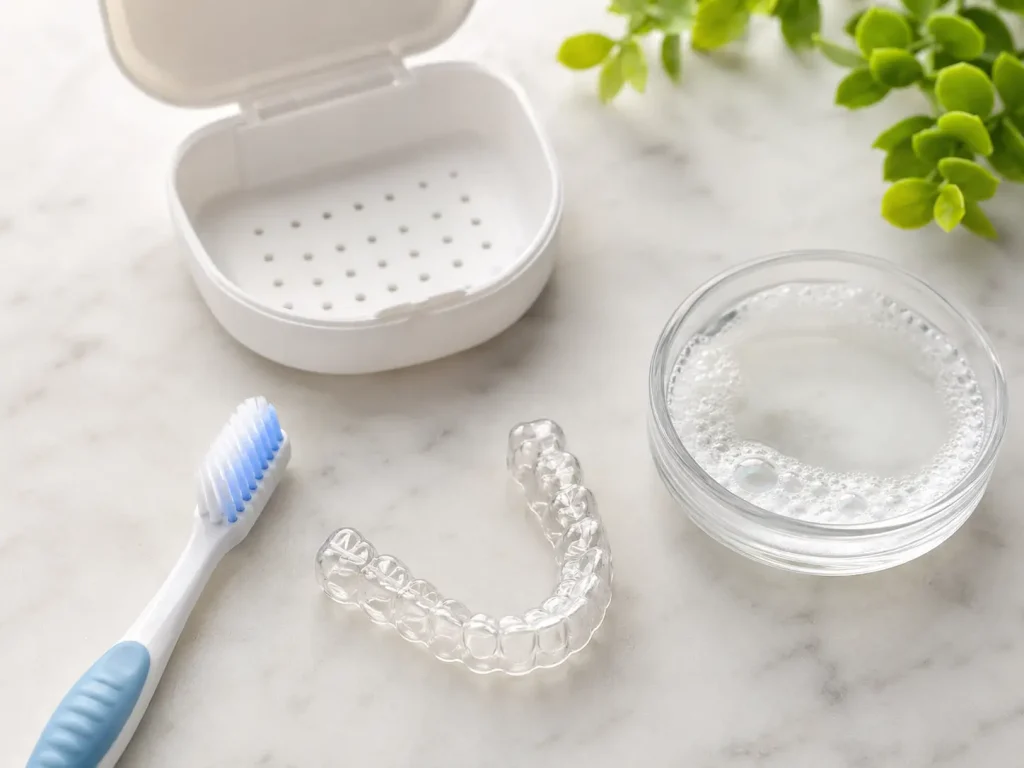
Why a Clean Retainer Matters More Than You Think
A retainer is not just a piece of plastic. It is a warm, moist surface that lives in your mouth, which makes it a perfect home for bacteria and biofilm. Skip cleaning it, and that film hardens into tartar, the same way it does on neglected teeth.
The consequences are real. A dirty retainer can cause bad breath, gum irritation, and even contribute to cavities, because you are pressing a bacteria-covered appliance against your teeth for hours. Over time, buildup also clouds a clear retainer and locks in odors that no amount of rinsing will shift. Keeping it clean protects your breath, your gums, and the appliance itself. It also protects the investment underneath it all, because a retainer is what keeps your teeth from drifting back after braces, as we cover in our article on why teeth shift after treatment.
Your Daily Cleaning Routine, Step by Step
Daily care is quick, and consistency beats intensity. The American Association of Orthodontists keeps the routine refreshingly simple. Here is what to do every single day.
• Rinse it the moment you take it out. Use lukewarm water to flush away saliva and debris while it is still wet, before anything has a chance to dry and harden. Lukewarm, never hot.
• Brush it gently once a day. Use a soft-bristled brush kept just for your retainer, with a little mild dish soap. Work over every surface, then rinse thoroughly.
• Clean your mouth at the same time. Brush and floss your teeth before the retainer goes back in, so you are not sealing food and bacteria against your enamel.
• Store it properly when it is out. Pat it dry and keep it in a ventilated case, never wrapped in a napkin where it gets tossed in the trash or crushed.
That is genuinely it for daily care. The one habit worth emphasizing is cleaning it while wet, because dried saliva and plaque are far harder to remove. Your teeth deserve the same daily attention, which we break down in our guide to keeping your smile healthy.
The Weekly Deep Clean
Daily brushing handles the surface. Once a week, a deeper soak clears the buildup and bacteria that daily care leaves behind, and it restores clarity to a clear retainer. You have a few safe options, and you can rotate between them.
• Retainer-cleaning tablets. Drop one in a glass of warm, not hot, water, let it fizz and dissolve, then soak your retainer for the time on the package, usually 10 to 15 minutes. Rinse well afterward.
• Diluted vinegar. Mix equal parts white vinegar and cool or lukewarm water and soak for 15 to 20 minutes. This lifts mineral deposits and the chalky film. Rinse thoroughly, since the smell lingers otherwise.
• Diluted hydrogen peroxide. The AAO notes a soak of one part hydrogen peroxide to one part water for 15 to 20 minutes, about once a week, helps remove stains and bacteria. The American Dental Association recognizes properly diluted hydrogen peroxide as an effective disinfectant for oral appliances.
A practical note on baking soda, since it comes up constantly. It works as a gentle deodorizer mixed into a soak, but do not scrub clear plastic with dry or paste baking soda, because it is abrasive enough to scratch the surface. And on a Hawley retainer, daily baking soda can tarnish the soldered metal over time. Use it occasionally, not as your everyday method.
What Ruins a Retainer: Mistakes to Avoid
This is the part that saves your appliance, so pay closer attention here than anywhere else. Most retainer damage does not come from neglect. It comes from well-meaning cleaning done the wrong way.
Hot Water, Toothpaste, and Other Silent Killers
These are the habits that quietly destroy retainers, and almost everyone has done at least one of them:
• Hot water. This is the number one retainer killer. Boiling water, the dishwasher, a hot car dashboard, or even very hot tap water can warp clear plastic out of shape, and a warped retainer no longer fits or holds your teeth. Always use lukewarm.
• Toothpaste. It feels logical, but most toothpaste is abrasive. It scratches the plastic, and those microscopic scratches become grooves where bacteria settle in and cloud the surface permanently. Mild dish soap is the safer choice.
• Bleach, alcohol, and mouthwash. These degrade retainer materials, can discolor them, and leave harsh residue against your gums. Skip them entirely.
• Prolonged soaks in strong solutions. Leaving a retainer soaking for hours in a potent cleaner can cloud clear plastic and weaken the solder joints on a Hawley retainer. Stick to the recommended soak times.
• Storing it wet and sealed. Trapping moisture in a closed case invites bacterial growth and odor. Pat it dry and use a case with ventilation holes.
If you take away one rule from this entire article, make it this: lukewarm water and mild soap, never hot water and never toothpaste. That single habit prevents the large majority of retainer damage.
Cleaning by Type: Clear, Hawley, and Bonded Retainers
Not all retainers are cleaned the same way, and using the wrong method on the wrong type is a common mistake. Here is how the three main types differ.
| Retainer type | How to clean it | What to avoid |
| Clear plastic (Essix, Vivera) | Lukewarm water rinse plus gentle brushing with mild dish soap; weekly soak in a retainer tablet or diluted vinegar | Hot water, toothpaste, scrubbing with baking soda directly, prolonged soaks in strong solutions |
| Hawley (acrylic plate and wire) | Lukewarm water and mild dish soap daily; retainer tablet soak for deeper cleaning | Hot water, daily baking soda on the soldered metal, long soaks that weaken solder joints |
| Bonded (fixed wire behind teeth) | Floss daily with a threader or water flosser; brush the wire gently; regular dental cleanings | Do not soak it at all, since it is attached to your teeth |
The bonded retainer deserves a special mention, because it is the one people most often clean wrong. Since it is a thin wire cemented behind your front teeth, you cannot take it out to soak it. Cleaning it is really about flossing. Use a floss threader or a water flosser to get underneath the wire every day, because plaque and tartar love to collect there, right against your gumline. Neglect it and you invite the very gum problems the retainer was never meant to cause. Regular professional cleanings matter more with a bonded retainer than with any other type.
When a Smell or Cloudiness Means It’s Time to Replace
Even with perfect care, retainers do not last forever, and knowing when to replace one saves you from wearing an appliance that is quietly failing. As a rough guide, clear plastic retainers typically last 1 to 3 years, while Hawley retainers can last 5 to 10 years thanks to their sturdier build.
Beyond age, watch for these signs it is time for a replacement or at least a professional look:
• Odor or cloudiness that will not go away despite proper daily and weekly cleaning, which can mean microscopic cracks are harboring bacteria.
• Visible cracks, warping, or a change in shape, all of which compromise the fit and how well it holds your teeth.
• Tartar buildup that home cleaning cannot remove, which your orthodontist can often clear with professional tools.
• A fit that has changed, feeling loose, too tight, or causing sore spots, or a bonded wire that has broken or lifted.
Here is an important safety point from the AAO: if you notice cracks or loose wires, stop wearing the retainer immediately, because a warped or broken one can shift your teeth improperly or irritate your mouth. If you have a backup, wear that in the meantime to protect your alignment while you get a replacement. And replace your storage case every 6 to 12 months, or sooner if it starts to smell, since a dirty case re-contaminates a clean retainer.
Storage and Travel: The Overlooked Half of Retainer Care
Cleaning gets all the attention, but how you store a retainer between wears matters just as much, and it is where most retainers actually get lost or wrecked. A little discipline here saves you a replacement fee and a lot of hassle.
A few habits that make a real difference:
• Always use the case, every time. The single most common way retainers die is wrapped in a napkin at a restaurant, then thrown away or crushed. If it is out of your mouth, it belongs in its case, no exceptions.
• Keep it dry and ventilated. Pat the retainer dry before storing, and use a case with air holes. A sealed, damp case is a bacteria incubator that undoes your cleaning.
• Keep it away from heat, always. A car dashboard, a windowsill, or a bag left in the sun can reach temperatures that warp clear plastic. Heat is just as dangerous in storage as it is during cleaning.
• Keep it away from pets. Dogs are famously drawn to the smell of retainers, and a chewed retainer is one of the most common replacements orthodontists see. Store it up high, not on a nightstand within reach.
When you travel, pack your retainer in your carry-on, not a checked bag, so it stays with you and away from the temperature swings of a cargo hold. Bring a travel-sized soap or a few cleaning tablets so your routine does not lapse for a week. Missing a few days of cleaning will not ruin a retainer, but a warped or lost one on vacation means arriving home to shifted teeth. A little planning keeps your smile exactly where you left it.
Keeping Your Smile Set at Freedman & Haas
A retainer is the quiet hero of orthodontic treatment. It holds everything your braces or aligners accomplished, often for life, so a few minutes of proper care each day is a genuinely good trade. Lukewarm water, mild soap, a weekly soak, the right method for your type, and a close eye on wear. That is the whole formula.
At Freedman & Haas Orthodontics, we make sure every patient leaves knowing exactly how to care for their specific retainer, and we are always happy to check its fit, clear stubborn buildup, or replace one that has run its course. We have guided more than 30,000 patients across West Palm Beach and Wellington to finished smiles, and helping you keep yours is part of the deal. If your retainer is cloudy, smelly, or just not fitting like it used to, reach out and we will take a look.
Frequently Asked Questions
How often should I clean my retainer?
Rinse it in lukewarm water every time you take it out, and give it a gentle brush with mild dish soap once a day. Add a deeper soak, using a retainer tablet, diluted vinegar, or diluted hydrogen peroxide, about once a week. Daily care prevents buildup, and the weekly soak clears what daily cleaning leaves behind.
Can I clean my retainer with toothpaste?
No. Most toothpaste is abrasive and scratches the retainer surface, creating microscopic grooves where bacteria settle and cloud the plastic permanently. Use mild dish soap and a soft brush instead. Save toothpaste for your teeth, not your retainer.
Why does my retainer smell even after I rinse it?
A lingering smell usually means bacteria and biofilm have built up beyond what rinsing removes. Try a weekly deep soak in a retainer tablet, diluted vinegar, or diluted hydrogen peroxide, and always store it dry in a ventilated case. If the odor persists despite proper cleaning, the retainer may have microscopic cracks harboring bacteria, and it is worth having your orthodontist check it.
Can I soak my retainer in hot water to disinfect it?
No, and this is one of the most common ways retainers get ruined. Hot water warps clear plastic out of shape, and a warped retainer no longer fits or holds your teeth properly. Always use lukewarm or cool water. To disinfect, use a diluted hydrogen peroxide soak or a retainer-cleaning tablet instead.
How do I clean a permanent or bonded retainer?
Since a bonded retainer is fixed behind your teeth, you cannot soak it. Clean it by flossing daily with a floss threader or water flosser to reach under the wire, where plaque and tartar collect near the gumline, and brush the wire gently. Regular professional dental cleanings are especially important with a bonded retainer.