
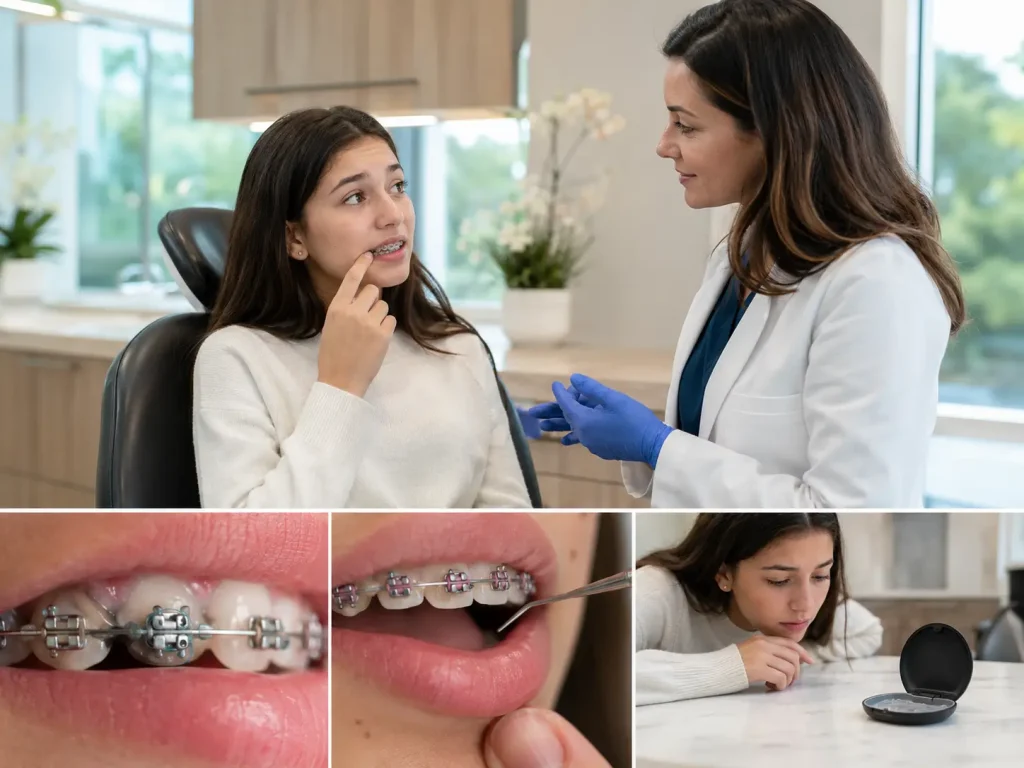
It is 9pm on a Friday. You are eating dinner and you hear a small crack. A bracket has broken off. Or you wake up and realize you have no idea where your last Invisalign aligner went. Or a wire that was fine yesterday is now jabbing into your cheek with every bite.
Orthodontic problems at inconvenient times are practically a rite of passage for anyone in treatment. The good news is that the vast majority of orthodontic problems patients call emergencies are actually minor issues that can be managed at home with simple measures until you can reach the office. Only a small number of situations genuinely require same-day care.
This guide covers exactly how to tell the difference, what to do for each of the most common orthodontic problems, what to keep in a home emergency kit, and when to call Freedman & Haas Orthodontics in West Palm Beach or Wellington.
Is It Actually an Orthodontic Emergency?
The word “emergency” gets used broadly in orthodontics, but most of what patients call emergencies are more accurately described as inconveniences or discomforts that need professional attention soon, though not necessarily immediately. The distinction matters because it affects how urgently you need to act and whether waiting until the next business day is appropriate.
True Emergencies That Need Same-Day Care
Genuine orthodontic emergencies that warrant an immediate call to the office, or an urgent care visit if after hours, include:
- Trauma to the mouth or face that causes tooth fracture, displacement, or avulsion (a tooth knocked completely out)
- Significant swelling in the gums, jaw, or face that could indicate infection
- Severe, unmanageable pain that over-the-counter pain relievers do not control
- A wire that has penetrated the soft tissue and cannot be safely moved
- Swallowing a piece of orthodontic hardware
If you swallow a small orthodontic component such as a bracket or a small wire segment, try not to panic. In most cases the piece will pass through the digestive system without issue. However, if you experience difficulty breathing, persistent coughing, or chest discomfort, seek emergency medical attention immediately, as the piece may have entered the airway rather than the esophagus.
Minor Issues You Can Handle at Home Until Your Next Visit
Everything else can typically wait for the next available appointment, especially if you have the tools and knowledge to manage discomfort in the meantime:
- A broken bracket that is still on the wire
- A poking wire end
- A loose band
- Mouth soreness after an adjustment
- A lost or broken Invisalign aligner
When in doubt, call the office. The team at Freedman & Haas can quickly assess over the phone whether you need to come in urgently or whether a home management strategy will hold you until your next scheduled visit.
Broken or Loose Bracket: What to Do Right Now
Brackets can break or detach from the tooth surface if you bite into something hard, eat a restricted food, or through normal wear over the course of metal braces treatment. A broken bracket is rarely a true emergency, but it does need to be repaired to keep treatment on schedule.
If the Bracket Is Still Attached to the Wire
If the bracket has detached from the tooth but remains threaded onto the archwire, leave it in place. Attempting to remove it may cut your mouth or damage the wire. You can use a pencil eraser to gently slide the bracket to a less irritating position, then apply orthodontic wax over it to prevent it from scratching the inside of your cheek.
Call the office to schedule a repair appointment. Most practices prioritize bracket repairs so treatment does not fall significantly behind. A broken front tooth bracket typically warrants a quicker appointment than a back-tooth bracket, though both should be addressed within a few days.
If the Bracket Has Come Off Completely
If the bracket has detached entirely, rinse it and keep it in a small zip-lock bag. Bring it to your appointment so the team can assess whether it can be rebonded or needs replacement. Do not attempt to reattach it yourself with household adhesives. Orthodontic brackets use specialized dental bonding agents applied under controlled clinical conditions, and improvised adhesives can damage the tooth surface or create bonding problems at the repair appointment.
With the bracket off, the tooth it was attached to will not be receiving orthodontic force until the repair is made. The sooner you come in, the less treatment time is affected.
Poking or Broken Wire: Step-by-Step Fix
Wire issues are the most common orthodontic inconvenience patients deal with between appointments. Wires can slip out of the back bracket, break, or gradually slide to one side as teeth move, leaving a sharp end exposed at the back of the mouth.
Push the Wire Back With a Pencil Eraser
If a wire end is poking but has not broken, it has simply shifted out of position. You can often push it back using the eraser end of a clean pencil. Gently tuck the wire end back into or behind the last bracket. This works especially well for the main archwire that has slipped out of the back tube.
Cover the End With Orthodontic Wax
Orthodontic wax is the single most useful home management tool for any braces problem. Roll a small piece between your fingers to warm and soften it, then press it firmly over the poking wire end or rough bracket edge. The wax creates a smooth surface that prevents the wire from irritating the cheek or tongue and lasts long enough to get you through until your appointment. Orthodontic wax is available at virtually any pharmacy. If you do not have any on hand, a small piece of sugarless gum can serve as a temporary substitute.
When (and How) to Safely Trim a Wire at Home
If a wire is poking severely and wax is not providing adequate relief, it is sometimes appropriate to trim the wire end carefully at home. Use small nail scissors or fingernail clippers, not regular scissors, and trim only the very end of the protruding wire with a clean, precise cut. Work with a good light source, and have someone help if the wire is in a difficult-to-see location.
Wire trimmings are small enough to be swallowed or inhaled, so place a small piece of tissue or gauze near the area as a catch before trimming. If you are at all uncertain, call the office. The team can often walk you through the process over the phone, or advise on whether waiting until morning is safe.
Lost or Broken Invisalign Aligner: What to Do
Losing or breaking an Invisalign aligner is a stressful experience, particularly when it happens on a weekend or during a trip. The right response depends on how far into your current aligner cycle you are.
Move Forward, Go Back, or Wait?
If you have been wearing the current aligner for most of its prescribed wear time and are close to the switch date, you may be able to move on to the next aligner in the series. Contact the office to confirm this is appropriate for your specific case before doing so.
If you have only recently started wearing the aligner that was lost or broken, your best option is usually to return to the previous aligner and wear it while a replacement is ordered. The previous aligner will maintain the tooth positions you have achieved without pushing beyond where the lost aligner would have taken them.
If you are squarely in the middle of a wear cycle, call the office for guidance. Do not simply stop wearing aligners. Any significant period without alignment pressure allows teeth to drift, and your next aligner may not fit correctly as a result.
For daily maintenance while you have aligners, knowing how to clean your Invisalign aligners properly also helps extend their life and reduces the likelihood of damage from buildup or improper handling.
Why You Should Never Skip Wearing Aligners
A single day without your aligner is unlikely to cause significant setback. A week without it, particularly in the middle of active treatment, gives teeth enough time to drift slightly, meaning your next aligner may not seat properly. If you will be without an aligner for several days while waiting for a replacement, keep wearing the last available aligner you have, even if it is a previous set, to maintain pressure and prevent drift.
Lost or Broken Retainer
A lost or broken retainer needs to be replaced promptly, and the urgency depends on how long you have been in retention. If you finished active treatment recently, within the last year or so, your teeth are still in a relatively unstable phase and going without a retainer for more than a few days risks meaningful shifting. Understanding why you need to wear a retainer and how the biology of retention works helps clarify why this timeline matters.
If you have been in stable retention for several years and your teeth are well-established, a few days without your retainer is less likely to cause visible shifting. That said, lower front teeth in particular have a persistent tendency to crowd, and even long-term retention patients can notice changes after extended gaps in wear.
Do not try to force a broken retainer back onto your teeth if it does not fit properly after breaking. Broken retainers can have sharp edges that cut soft tissue, and a retainer that no longer fits correctly can apply pressure in undesirable directions.
Mouth Sores, Soreness, and Cheek Irritation
Some degree of soreness is normal after braces are placed and after each adjustment appointment. The teeth are under new pressure, and the surrounding tissues take a few days to adapt. Over-the-counter pain relievers such as ibuprofen or acetaminophen, taken as directed, manage this discomfort effectively for most patients.
Cheek irritation from brackets rubbing against the inside of the mouth is common in the first weeks of treatment, before the cheeks develop a slight callus from the contact. Orthodontic wax applied to the offending bracket provides immediate relief. Warm saltwater rinses, a teaspoon of salt in a glass of warm water, soothe irritated tissue and promote healing of any minor abrasions. If a mouth sore is severe, has been present for more than two weeks, or is accompanied by swelling and fever, contact the office for guidance.
What to Keep in Your Home Braces Emergency Kit
Having the right supplies on hand before you need them makes orthodontic problems considerably less stressful. Consider keeping the following items together in a small travel bag or case:
- Orthodontic wax (available at any pharmacy)
- A clean pencil with an eraser
- Small tweezers
- Over-the-counter pain reliever
- A travel-size mirror
- A small zip-lock bag for storing broken components to bring to your appointment
For Invisalign patients, also keep a dedicated case for your aligners whenever they are out of your mouth, and a travel toothbrush and toothpaste for cleaning teeth before reinserting aligners. Never wrap aligners in a napkin. This is the single most common way aligners get accidentally thrown away.
Foods to Avoid While You Wait for a Repair
If you are waiting for a broken bracket repair or wire fix, additional dietary caution is warranted until your appointment. A thorough guide to what you can eat with braces covers the full list, but the most important things to avoid while waiting for a repair are:
- Hard foods such as ice, hard candy, nuts, raw carrots, and crusty bread that could worsen the break or cause additional hardware damage
- Sticky foods such as caramel, gummies, and taffy that could further dislodge a loose bracket or pull a wire out of position
Soft foods are your best option in the days between a breakage and the repair appointment. Pasta, yogurt, soft cooked vegetables, scrambled eggs, and soup keep you comfortable and prevent compounding the problem before you can get in to see the orthodontist.
When to Call Freedman & Haas in West Palm Beach or Wellington
You should call the office any time you experience:
- A true emergency as described above
- A broken bracket or wire that cannot be managed comfortably with wax
- A lost or broken retainer
- A lost Invisalign aligner
- Significant pain that persists beyond the normal post-adjustment window
- Any situation where you are uncertain whether something is normal
At Freedman & Haas Orthodontics, we handle orthodontic emergencies for our patients and work to accommodate urgent situations promptly. Reach our West Palm Beach office at (561) 659-7660 or our Wellington office at (561) 795-2734.
Conclusion
Orthodontic problems during treatment are part of the experience, and they happen to almost everyone at some point. The key takeaways from this guide: true orthodontic emergencies are rare, and most situations can be managed at home while you wait for your next appointment; orthodontic wax is the single most useful item to have on hand for braces patients; for Invisalign patients, never stop wearing aligners entirely, go back to a previous set if needed; retainer loss needs prompt attention, especially in the first year of retention; and when in doubt, a quick call to the office is always the right move.
Keeping a basic emergency kit at home and knowing what to do in each scenario means you are rarely caught completely unprepared. If you are a patient at Freedman & Haas and something has come up, do not hesitate to call. And if you are not yet a patient but are experiencing an orthodontic issue or considering starting treatment, book a free consultation and we will take a look.