
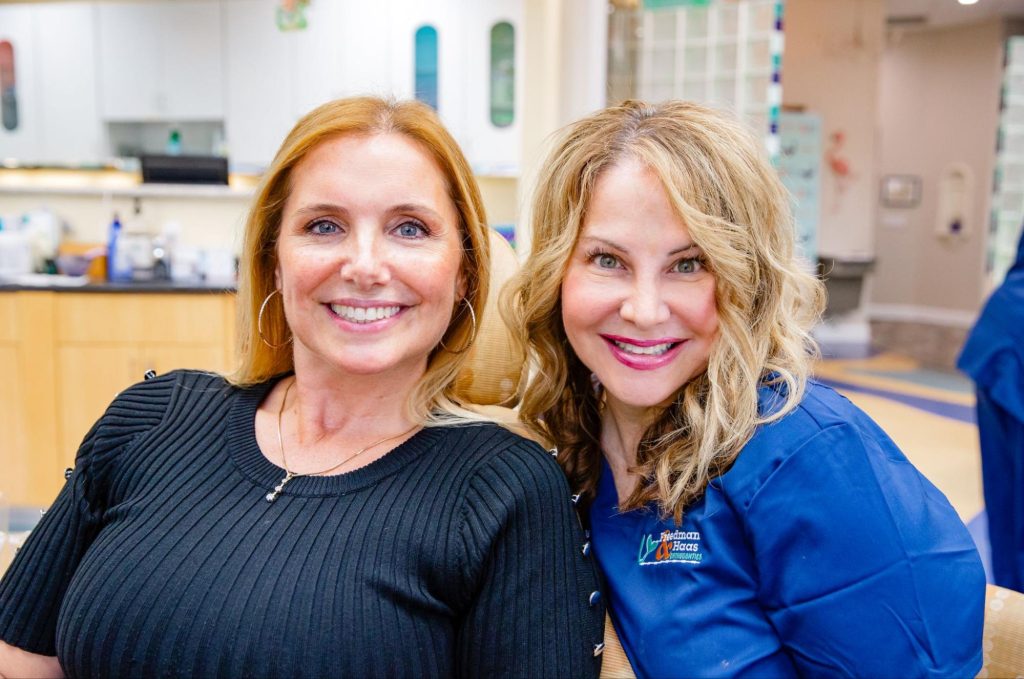
There’s a persistent myth that orthodontic treatment is something you do as a teenager, and if you didn’t do it then, you missed your chance. That idea has been thoroughly disproven by decades of adult orthodontic success, but it still holds a surprising number of people back from seeking treatment that could genuinely improve their quality of life.
The reality is that teeth can be moved at any age. The biology of tooth movement doesn’t stop working at 18 or 40 or 60, it just works a bit differently in mature bone. Adults over 40 are one of the fastest-growing segments in orthodontics, and the treatments available today, particularly Invisalign and clear ceramic braces, are uniquely well-suited to adult needs.
At Freedman & Haas Orthodontics, we treat patients at every stage of life. If you’ve been thinking about orthodontic treatment but assumed you were too old to consider it, this guide is for you.
Why More Adults Over 40 Are Getting Orthodontic Treatment
A few things have converged to make adult orthodontic treatment significantly more common over the past decade. Treatment technology has improved dramatically, the era of highly visible metal braces as the only option is long gone. Invisalign and clear ceramic braces make it possible to go through treatment without it being visually obvious, which removes one of the biggest psychological barriers for working professionals.
At the same time, there’s growing awareness that orthodontic issues don’t resolve on their own as you age, they tend to get worse. Crowding that was mild at 25 can become moderate at 40 and significant at 55. Teeth that gradually shift create new bite problems, uneven wear, and hygiene challenges. Many adults seek treatment not from a desire for cosmetic improvement but from a functional need: teeth that are harder to clean, a bite that’s causing jaw discomfort, or noticeable changes in how their smile looks in photos.
And finally, financial access has improved. With flexible payment plans and FSA/HSA options, the investment is more manageable than it used to be.
Is There an Age Limit for Braces or Invisalign?
No. There is no upper age limit for orthodontic treatment. As long as your teeth and gums are healthy enough to support treatment, and most adults’ are, orthodontic treatment is an option. The evaluation process for adult patients includes a careful assessment of gum health, bone density, and any existing dental restorations to ensure treatment can proceed safely and effectively.
How Adult Teeth Respond to Orthodontic Forces
The fundamental mechanics of orthodontic treatment are the same at 45 as they are at 14. Teeth move through bone remodeling: gentle, sustained pressure from braces or aligners causes bone to dissolve on one side of the root and rebuild on the other, allowing the tooth to migrate gradually in the desired direction.
The difference in adults is the rate of this process. Mature bone remodels more slowly than adolescent bone, which means adult treatment typically takes longer than the same treatment would for a teenager. A case that might take 14 months in a 13-year-old might take 20 to 24 months in a 45-year-old. This doesn’t mean treatment is less effective, it means you need to plan for a somewhat longer timeline and be patient with the process.
Bone Density and Gum Health Considerations
For adults over 40, gum health is probably the most important factor that affects orthodontic candidacy. Periodontal disease, which affects the bone and tissue supporting the teeth, can compromise the stability of teeth during treatment and after. If there is active gum disease, it must be treated and stabilized before orthodontic treatment begins.
Adults with a history of periodontal disease aren’t disqualified from treatment, but they require closer coordination between their orthodontist and periodontist throughout the process. Many of our adult patients have a simple monitoring protocol with their periodontist during treatment, ensuring that any changes in gum health are caught and addressed promptly.
Bone density is also a consideration, though rarely a disqualifying factor. Teeth move through healthy bone regardless of age; very low bone density (as in severe osteoporosis) may slow movement somewhat but doesn’t typically preclude treatment.
Common Orthodontic Issues in Adults Over 40
Adults seeking treatment at 40 or older often present with issues that are somewhat different from those seen in teenage patients. Understanding the most common adult presentations helps set appropriate expectations for treatment.
Teeth Shifting and Relapse From Earlier Treatment
One of the most common reasons adults over 40 seek orthodontic treatment is that they had braces as teenagers but didn’t wear their retainers consistently. Teeth tend to drift back toward their original positions over the years, and for many patients, significant relapse has occurred by their 30s or 40s.
Retreating relapse is generally straightforward. The teeth have already been moved once, the bone knows how to remodel, and the path back to alignment is usually well-defined. Treatment for relapse cases is often shorter than the original treatment was.
Crowding That Worsens With Age
Dental crowding tends to worsen gradually over a lifetime. Teeth are always under mild forward pressure from the muscles of the mouth, and over decades, this pressure causes lower front teeth in particular to crowd and overlap progressively. Adults who had relatively straight teeth at 25 sometimes notice significant crowding by their 40s.
Addressing crowding in adults requires consideration of why it’s occurring. If it’s simply aging drift, orthodontic correction followed by consistent retainer wear is highly effective. If it’s related to bite forces, grinding, or other issues, those contributing factors need to be addressed in the treatment plan.
Bite Changes Related to Tooth Wear or Loss
Adults who have experienced significant tooth wear from grinding (bruxism), tooth loss that was not replaced, or bite shifts from prior dental work may present with complex bite discrepancies that have developed over years. These cases often require coordination between the orthodontist and restorative dentist to plan treatment in the right sequence.
For example, a patient who lost a tooth years ago and never replaced it may have experienced significant tipping and drifting of adjacent teeth. Orthodontic treatment can upright and reposition those teeth to create the ideal space for an implant or bridge, then the restorative work follows.
Best Treatment Options for Older Adults
Adult patients over 40 have essentially the same menu of treatment options as younger patients, with a few important practical considerations.
Invisalign for Adults: Discreet and Effective
Invisalign is often the treatment of choice for adults over 40. The clear aligners are virtually invisible, removable for eating and drinking, and generally more comfortable than fixed braces for adult patients. For working professionals, the discretion is particularly valuable.
Invisalign is highly effective for the types of cases most common in adult patients, moderate crowding, spacing, relapse from prior treatment, and certain bite corrections. For very complex bite problems involving significant vertical or skeletal components, fixed braces may provide better control. An experienced orthodontist will help you understand which option is better suited to your specific case.
Clear Braces for Complex Adult Cases
Ceramic (clear) braces combine the full control of traditional fixed braces with a much more discreet appearance. They’re an excellent option for adults braces who need the precision of fixed appliances but want a subtler look.
Clear braces use the same mechanics as metal braces and work on the same timeline. For complex adult cases that require precise control of multiple teeth simultaneously, clear braces offer the best of both worlds.
Coordinating With Your Dentist and Periodontist
Adults over 40 are more likely to have existing dental work, crowns, bridges, implants, fillings, that needs to be considered during treatment planning. Orthodontic treatment doesn’t affect implants (implants are fused to bone and don’t move), but it can affect teeth adjacent to implants and teeth that bear restorations.
Communication between your orthodontist and your general dentist or specialist is important. At Freedman & Haas, we coordinate closely with our patients’ dental teams to ensure that treatment is sequenced correctly and that orthodontic movement doesn’t conflict with planned restorative work.
How Long Does Adult Orthodontic Treatment Take?
As noted above, adult treatment generally takes somewhat longer than adolescent treatment for the same case complexity. A moderate crowding case might take 14 to 18 months in a teenager and 20 to 28 months in an adult. Complex bite corrections can take longer.
That said, many adult cases are straightforward, particularly retreatment of relapsed prior orthodontic work, which can sometimes be completed in 12 to 18 months. Cases that involve only mild to moderate crowding or spacing without significant bite component are typically on the shorter end.
The most accurate estimate comes from an individual evaluation. Treatment time depends on your specific anatomy, the degree of movement needed, and how your bone responds. We give patients a realistic timeline estimate at the initial consultation, not a range so wide it’s meaningless, but a genuine projection based on what we see.
Adult Orthodontics at Freedman & Haas
At Freedman & Haas Orthodontics, adult patients are a valued and growing part of our practice. We see adult patients at our West Palm Beach and Wellington offices, and we have extensive experience managing the unique considerations that come with adult treatment.
We offer free initial consultations for adult patients. In that appointment, we review your dental and medical history, take digital scans and X-rays, evaluate your teeth and bite, and give you a clear picture of what treatment would involve, how long it would take, and what it would cost. There’s no commitment required, and no pressure.
Conclusion
The idea that orthodontic treatment is only for teenagers has been disproven by millions of adults who have chosen to invest in their smiles later in life. The treatments available today, especially Invisalign and clear ceramic braces, are well-suited to adult needs: discreet, comfortable, and effective.
If you’re over 40 and have been thinking about straightening your teeth, improving your bite, or correcting changes that have developed over the years, the best first step is a professional evaluation. Teeth can be moved at any age. The biology works. The technology is excellent. The only question is whether the timing is right for you.